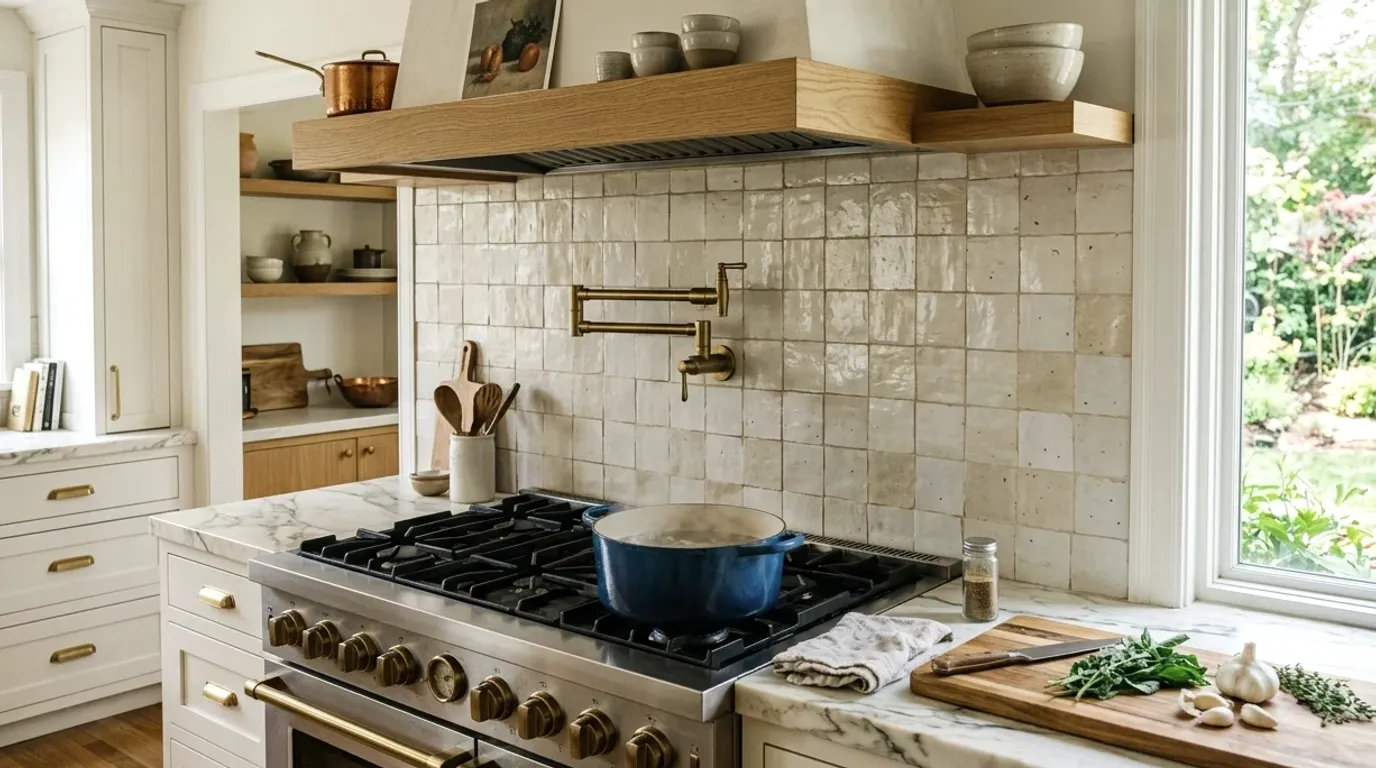
A white crust around the base of a kitchen faucet shows up often in Lakeside, Ramona, Escondido, and Poway. The coast gets salt film. Inland houses more often get mineral spots that turn dull on a dark finish and chalky on chrome. That spotting is a clue about the water, not a verdict that the faucet is junk.
Modern Kitchen San Diego matches homeowners with independent remodelers. We do not sell faucets, test your water, or set a price for a new sink. The notes below are what to look at before you order a finish you will hate in six months.
Spotting is not the same as a failing cartridge
Mineral film sits on the outside. It wipes or needs a soak. A failing cartridge shows up when you use the faucet. The handle is stiff, the spout drips after you shut it off, or the temperature swings when someone flushes a toilet.
Start with the outside. If the spots are only on the finish and the spray still shuts off cleanly, you are looking at water chemistry and cleaning, not a broken valve. If the drip continues after you clean the aerator, the cartridge or the supply lines are the next question for a plumber or the remodeler.
Do not assume every inland city has the same water. A house on a well, a house on a city main, and a condo with a building softener can behave differently on the same street. Ask what serves your address before you pick a finish based on a neighbor’s sink.
What you can clean yourself
Unscrew the aerator at the tip of the spout. Many of them are hand-tight. Inside you will find a screen and, on some models, a small plastic piece that sets the spray. Soak those parts. A soft brush gets the grit out of the screen. Put it back the same way it came off.
Wipe the spout and the base. A paste that is harsh enough to cut mineral film can also strip a coated finish. Read the faucet maker’s care note before you reach for a strong cleaner. If you do not have that note, test a hidden spot under the spout.
Look under the sink while you are there. Green or white crust on a shutoff valve, a soft hose, or the dishwasher connection means the mineral story is not limited to the faucet you see. Photograph it. A remodeler should see those photos at the measure, not after the new counter is templated.
Finish choices during a remodel
A dark matte faucet shows every spot. Polished chrome hides some of them and shows fingerprints instead. Brushed finishes sit in the middle. None of those looks fixes hard water. They change how soon you notice it.
If the remodel includes a new sink, decide the faucet holes before the counter is cut. A widespread faucet needs three holes. A single-hole faucet needs one. Changing your mind after stone is cut means a fabricator, not a trip to the store.
Ask the remodeler who supplies the faucet and who warranties the finish. Some bids carry an allowance and leave the model to you. Some name a model. Those are different deals. We do not publish prices, and a showroom tag is not your installed cost.
When a softener is a separate project
A whole-house softener, a filter under the sink, or no treatment at all is a household decision. It is not something this site can spec from a blog post. If you want treated water at the kitchen only, say that before the sink base is built. The cabinet has to leave room for a filter and for the valves you still need to reach.
If you are keeping the old faucet and only changing the counter, say that too. The new deck height and the new hole pattern have to accept the faucet you already own. Bring the faucet paperwork, or a clear photo of the underside, to the measure.
What to hand a remodeler
Write down where the spots are worst, how often you clean them, and whether the faucet drips. Note if the house is on a well. Note if a softener already exists and whether it is working. That is enough for an honest conversation about finish and about whether the faucet should be replaced with the sink.
Check any contractor’s license at cslb.ca.gov before you sign. The remodeler you hire sets the scope. We can try to match you with someone who takes work in your part of the county. Call (858) 400-4913 and say your city and whether this is a faucet and sink, or a larger kitchen.