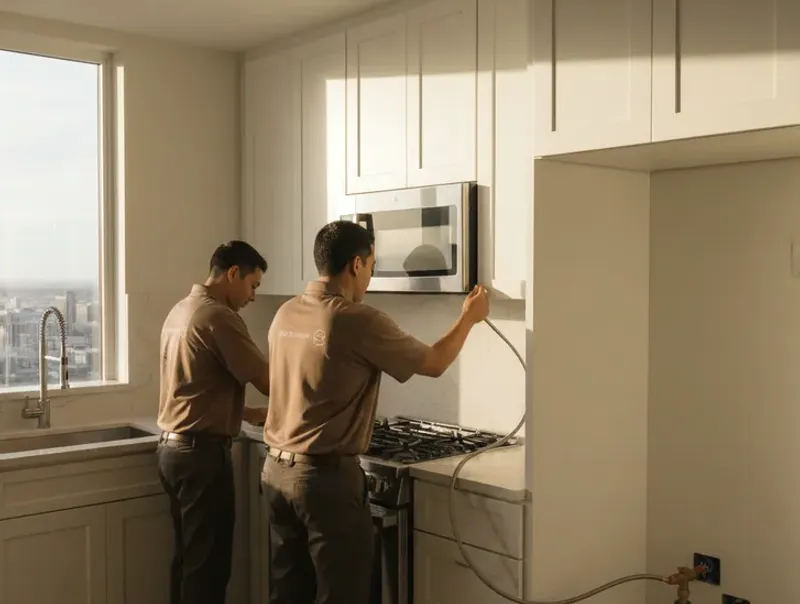
Some San Diego County kitchens need to be usable, not rebuilt. A landlord with a tired rental, or a tenant who has written permission to improve a place they will live in, is in a different job than a homeowner gutting a house they own. The first document is permission. The second is who owns the improvement when the tenancy ends. Those are between the landlord and the tenant. Modern Kitchen San Diego does not represent either side and this is not legal advice.
We match people with independent remodelers. We do not set rents, write leases, or price the work.
Start with a written yes
A text that says “sure, fix the kitchen” is a weak record. Ask for a short note that names the unit, what may change, what may not, and who pays. Cabinets, counters, plumbing, and anything that touches the building’s walls are the items that cause fights later. Paint and knobs are usually simpler. Still write them down.
If you are the tenant, do not demo a landlord’s cabinet because a blog said rentals often get painted. If you are the landlord, do not assume a tenant’s contractor is covered by your insurance. Ask your insurer and the remodeler for the certificate they actually need. We do not interpret policies.
A scope that leaves the unit habitable
A full gut takes the sink out. In a rental that is occupied, that is a habitability problem the landlord has to think through, including where the tenant washes dishes and whether they stay in the unit. An empty unit is simpler and still needs a plan for water shutoffs that do not hit the neighbor in a fourplex.
Smaller scopes are often the ones a landlord will sign: new hardware, paint on sound boxes, a faucet, a new counter if the boxes stay, a floor that does not require the cabinets to come out. Each of those can still reveal damage. The bid should say what happens if the cabinet floor under the sink is soft. Discovering rot and then arguing about who pays is the expensive version of this project.
Older units can involve lead-safe work practices when paint is disturbed. Ask the contractor what they do in a pre-1978 building. Do not take a statute number from a blog. The contractor is the one who should know the rule that applies to the job.
Who pulls permits and who is licensed
The person hiring the remodeler should check the license at cslb.ca.gov. In many rentals the landlord hires. Sometimes the tenant hires with permission. The permit, if the city requires one, has to be pulled by someone the city will accept, often the owner or a licensed contractor. Confirm that with the city that covers the address, not with a neighbor. City of San Diego Development Services is 619-446-5000. Other cities have their own counters.
Shared stacks in a duplex or a small apartment building are not the tenant’s to relocate. If the job even might move a drain, the owner and the remodeler need to say so before work starts.
What we will and will not do
We can try to introduce an independent remodeler for a rental kitchen in your city. Call (858) 400-4913 and say whether you are the owner or you have the owner’s written permission. We will not draft the permission, take a side in a deposit dispute, or promise a result. The contract for the work is between the hiring party and the remodeler.