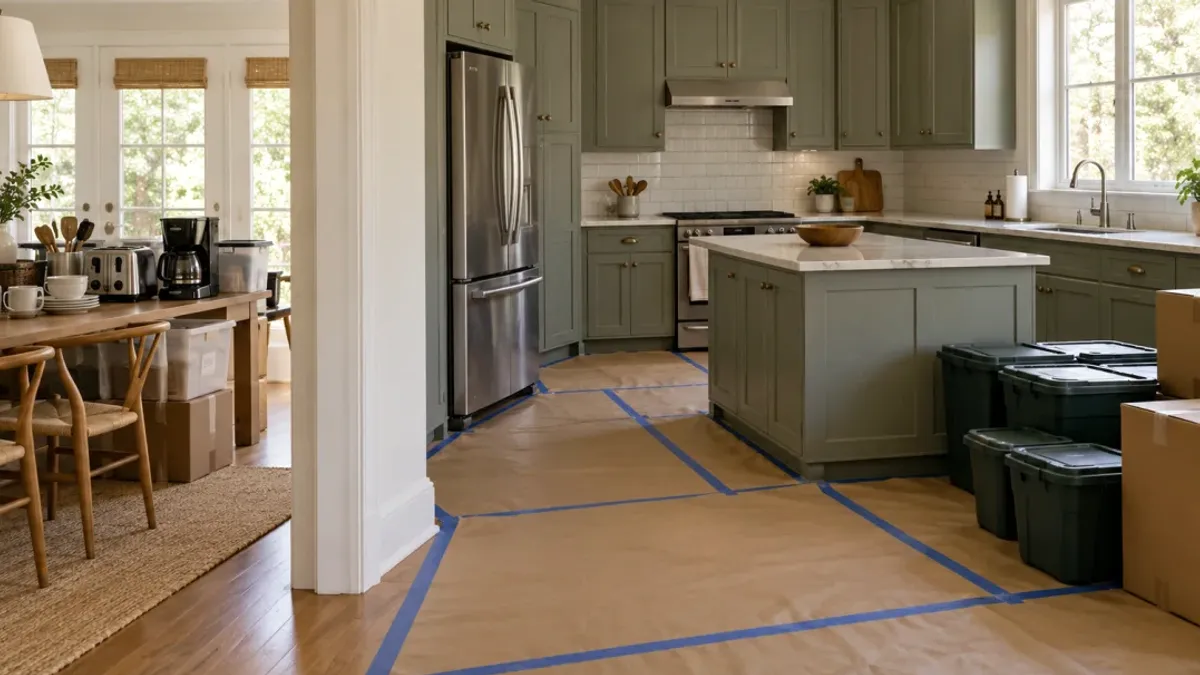
Old kitchen cabinets do not vanish when the new ones are ordered. They come off the wall as a pile of boxes, doors, and screws, and that pile has to go somewhere before the new kitchen can start. In San Diego County the answer is not one countywide program this page can quote. Reuse shops change what they accept. Cities change what they haul and what they charge. The useful move is to decide the path before demo day, then call the reuse store and the city and write the winner into the contract.
Modern Kitchen San Diego does not demolish kitchens, haul cabinets, or charge a dump fee. You contract with an independent remodeler. This page will not invent a nonprofit’s current rules or a fee. If a number or a rule is not confirmed by the place you will actually call, it is not a fact yet.
The pile is larger than the doors
People picture a few doors in a truck. A real demo pile includes boxes, drawers, shelves, the toe-kick, fillers, and sometimes the soffit trim and the light rail. Doors stacked neat are the easy part. A sink base with a soft floor, a corner cabinet in one piece, and a pantry that does not fit through the hallway are the hard part.
Before anyone pries a box off the wall, sort in words. Which cabinets could live again, which are swollen or broken, and which are trash because the particleboard is blown. A reuse conversation applies to the sound boxes. A haul conversation applies to the rest. Mixing them in one muddy pile in the driveway makes both paths worse.
Measure the sound boxes you hope to pass on: width, height, depth, and whether they are face frame or frameless. A beige oak box can be perfect for a garage workshop and useless to a store that only takes certain sizes. You will not know which until you ask. Take photos in daylight, including the inside. Counters, sinks, and appliances are a different load. Do not assume a place that wants boxes wants them too.
Reuse starts with a phone call
A reuse store, a school shop, or a community workshop may want cabinets. They may also say no because of size, material, water damage, or a full floor. None of that can be promised from a blog post. Call before demo day. Ask what they accept, whether they pick up, and whether you need an appointment. A yes last month is not a yes on demo day.
If they want the boxes intact, the remodeler has to remove them that way. That is slower than breaking them out. It belongs in the scope with the remodeler. This page will not guess the dollars. If the store will not take them, you still have a neighbor, a workshop, or a hauler. Ask for the store’s answer in writing if they will send it, including who must be there to receive the load.
Water-damaged sink bases are the usual rejection. A swollen bottom, mold, or a box that smells like a leak is not a gift. Pull those out of the reuse stack before you call, and say so. Honest photos save a wasted trip.
A neighbor or a workshop
Plenty of sound cabinets never see a store. A neighbor remodeling a laundry, a garage shop, or a rental utility room may want uppers and a base. A maker space or a friend with a workbench may want drawers. That only works if the boxes come off whole and leave your property on a day you both agree.
Write it down. Who takes which boxes, on what day, and who loads the truck. A “someone will grab them” plan fails when the new cabinets arrive and the old ones are still in the living room. If the remodeler is liable for the site, they need to know a third person is walking through. Insurance and timing are their business. Do not invite a stranger onto a job in progress without the remodeler’s say.
If nobody wants them, that is a normal outcome, not a personal failure. Cabinets are bulky. A no from neighbors means you move to a hauler or to whatever your city confirms for bulky items. Do not leave boxes in the public right of way because a pickup “usually” happens. Confirm the city’s current bulk-item rules yourself. This page will not describe them. Cities in the county are not the same, and the rules change.
A hauler and the jobsite
A hauler, the remodeler’s own haul, or a waste service you schedule are all legitimate when reuse has fallen through. The contract should say who removes the boxes, who pays the hauler, and when the pile must be gone. “Haul off” as two words with no date is how a driveway fills up for a week.
Ask where intact cabinets will sit between removal and pickup. Stairs, elevators, and building rules can limit the hour or the path. Those rules come from the building, not from this site. Ask before demo. A sound cabinet is still heavy. The remodeler should say how boxes leave the house. Do not cut a pantry into pieces until the taker has said they will still accept the pieces. Hinges are not the bulk problem. The boxes are. Call the city and the hauler rather than guessing a recycling path.
What the contract should say
Read the demo section before you sign. It should name the cabinets that stay, if any, and the cabinets that go. It should say whether removal means “intact for reuse” or “demo and haul.” Those are different jobs. It should say who schedules the truck, who is the contact for the reuse store, and what happens if the store refuses the load on the day. A backup path belongs in the same paragraph: haul, or a second call you have already made.
If an older finish might be hazardous, do not sand the cabinets or send them to a friend’s garage on a guess. Ask the remodeler what they will and will not do, and ask the city how disposal works for what you actually have. This page will not invent a test result for your house.
Permits, if the larger remodel needs them, are a separate track from the cabinet pile. Cabinet removal by itself is not something this page will call permitted or exempt. Your city decides. In the City of San Diego, Development Services is the counter people call at 619-446-5000 when they need that city’s permit answer. Other cities in the county have their own counters. Do not use that San Diego number for Chula Vista, Oceanside, Escondido, or anywhere else.
Call before demo day
The order is simple. Photograph and measure the boxes worth saving. Call the reuse store and ask for their current rules. Call the city about bulky waste or disposal rules that apply to your address. Then tell the remodeler which path is real. If both calls come back no, the hauler path is the plan, and it should be written down before the first box leaves the wall.
You sign with the remodeler who pulls the kitchen apart, not with Modern Kitchen San Diego. The service can try to match you with an independent remodeler. It does not run a warehouse for old cabinets and it does not promise that a donation will be accepted.